
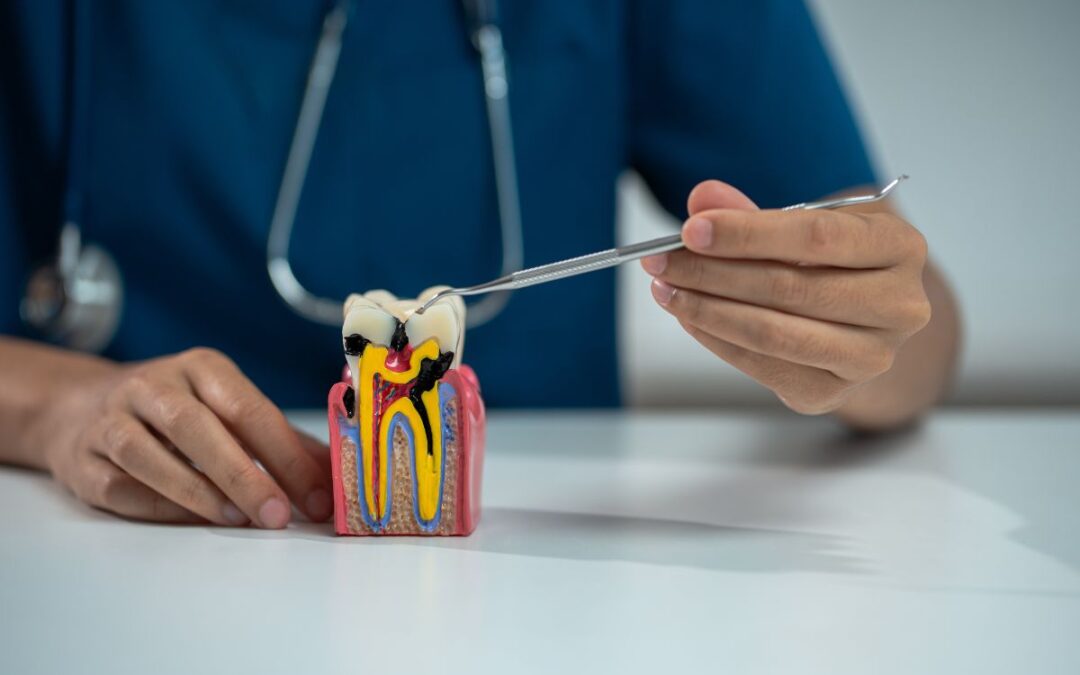
Many patients have heard of root canals, but few realize there are actually two types: non-surgical and surgical root canal procedures. Understanding the difference between surgical and non-surgical root canal treatments is essential when exploring options to save an infected or damaged tooth.
At Dental Group of Canyon, Texas, we’re committed to helping patients in the area make informed decisions about their dental care. This guide will help you understand “what is a non-surgical root canal”, how it compares to surgical alternatives, and when each treatment may be necessary. If you’re searching for expert guidance from a dentist in Canyon or are considering root canal treatment in Canyon, you’re in the right place.
What is a Root Canal?
An anatomical root canal is the natural space inside the tooth that houses the dental pulp—a soft tissue of nerves and blood vessels.
Root canal therapy, often referred to as RCT treatment, is a dental procedure that cleans, disinfects, and seals the space where the pulp becomes infected or inflamed. The primary goal of both non-surgical and surgical root canal treatments is to preserve the natural tooth and prevent the need for extraction.
Why Root Canal Therapy is Needed
The inner pulp of a tooth can become damaged or infected due to several reasons:
- Deep tooth decay
- Traumatic dental injuries
- Repeated or failed dental procedures
- Fractures or cracks in the tooth
When untreated, the infection can spread to surrounding tissues, leading to painful abscesses or eventual tooth loss. In such cases, timely RCT treatment can help prevent more extensive dental problems.
Symptoms of Damaged or Infected Pulp
If you’re experiencing any of the following signs, you may need root canal treatment in Canyon:
- Persistent or severe toothache
- Sensitivity to hot or cold
- Swelling or tenderness in the gums
- Discoloration of the tooth
- Recurrent pimple on the gums
- Presence of an abscess
Consulting a trusted Canyon dentist can help you identify the root cause and determine the most effective treatment plan.
Diagnosis: Do You Need a Root Canal?
Diagnosis usually involves:
- A comprehensive dental examination
- Digital X-rays to assess the root and surrounding bone
- Pulp vitality testing to check the health of the inner tooth tissue
After evaluating your case, your dentist in Canyon will determine whether a non-surgical root canal is sufficient or if surgical intervention is needed.
Non-Surgical Root Canal Treatment
Wondering “what is a non-surgical root canal?” It is the most common and straightforward RCT treatment, typically performed in one or two visits. Here’s what to expect:
- Application of local anesthesia
- Drilling into the tooth to access the infected pulp
- Removal of damaged tissue
- Cleaning and disinfecting the canal with solutions like sodium hypochlorite
- Filling the space with gutta-percha (a biocompatible material)
- Sealing the tooth with a permanent filling or crown
Depending on the complexity, this procedure can be handled by a general Canyon dentist or an endodontist.
Surgical Root Canal Treatment (Endodontic Surgery)
Surgical root canals are recommended when the non-surgical root canal fails or the issue cannot be accessed through standard means. This includes hidden canals, fractures, or persistent infections.
The procedure includes:
- Making a small incision in the gum to access the tooth’s root
- Removal of infected tissue or root tip (apicoectomy)
- Sealing the end of the root
- Bone grafting, if necessary
- Use of local or general anesthesia
This treatment is generally more complex and is performed by a specialist using advanced tools.
What is The Difference Between a Surgical and Non-Surgical Root Canal?
| Feature | Non-Surgical Root Canal | Surgical Root Canal (Endodontic Surgery) |
| Access Point | Through the crown of the tooth | Through the gum tissue directly to the root tip |
| Purpose | Remove infected or inflamed pulp, clean and seal root canals | Treat persistent infections, missed canals, fractured roots, or root-end complications |
| Indications | – Deep decay
– Infected pulp – Trauma – First-time treatment |
– Failed non-surgical RCT
– Hidden or calcified canals – Root fractures – Cysts or abscesses at the root tip |
| Procedure Type | Internal cleaning and sealing | Surgical removal of infected tissue or root tip (apicoectomy) |
| Steps Involved | 1. Local anesthesia
2. Access through the tooth 3. Pulp removal 4. Disinfection 5. Filling canals 6. Crown placement |
1. Local or general anesthesia
2. Gum incision 3. Root tip removal 4. Sealing root-end 5. Possible bone grafting 6. Suturing gum tissue |
| Anesthesia | Local anesthesia | Local or general anesthesia, depending on complexity |
| Pain and Discomfort | Minimal; mild soreness post-treatment | Slightly more discomfort; may require pain medication and antibiotics |
| Number of Visits | Usually 1–2 visits | May require multiple visits, including follow-up for healing |
| Complexity | Less complex; standard procedure | More complex; requires microsurgical precision and specialized tools |
| Tools Used | Rotary files, irrigants, obturation materials | Microscope, ultrasonic tips, surgical curettes, sutures |
| Recovery Time | Typically 1–3 days | 1–2 weeks; may include swelling and suture removal |
| Healing Process | Quick healing occurs inside the tooth | Slower; involves bone and soft tissue healing |
| Performed By | General Canyon dentist or endodontist | Endodontist or oral surgeon |
| Post-Treatment Restoration | Requires permanent filling or crown | May require additional restorative procedures depending on the case |
| Success Rate | High when pulp infection is straightforward and canals are accessible | High for previously failed cases when done by an experienced specialist |
| Cost | Lower than the surgical option | Higher due to specialized equipment, expertise, and complexity |
| Examples of Use | Toothache from deep decay; pulp inflammation; first-time root canal | Infection after root canal, persistent abscess, fractured root, hidden canals |
Which Root Canal Treatment Do You Need?
While both treatments aim to save your natural tooth, non-surgical root canal therapy is often sufficient for most cases. Surgical root canal procedures are typically reserved for complex conditions, failed previous treatments, or anatomical challenges.
Your dentist, Canyon, will guide you through the diagnostic process and recommend the most appropriate treatment based on your needs.
Expert Care You Can Trust in Canyon, TX
If you’re experiencing tooth pain or have been advised to consider RCT treatment, the Dental Group of Canyon, Texas, team is here to help. We provide advanced diagnostics and collaborate with skilled specialists when surgical care is necessary. Whether you’re searching for a reliable dentist in Canyon or looking for effective root canal treatment Canyon, we’re committed to preserving your natural smile with expert care.
Schedule your consultation today with Dental Group of Canyon, Texas — your trusted partner in lasting dental health.