
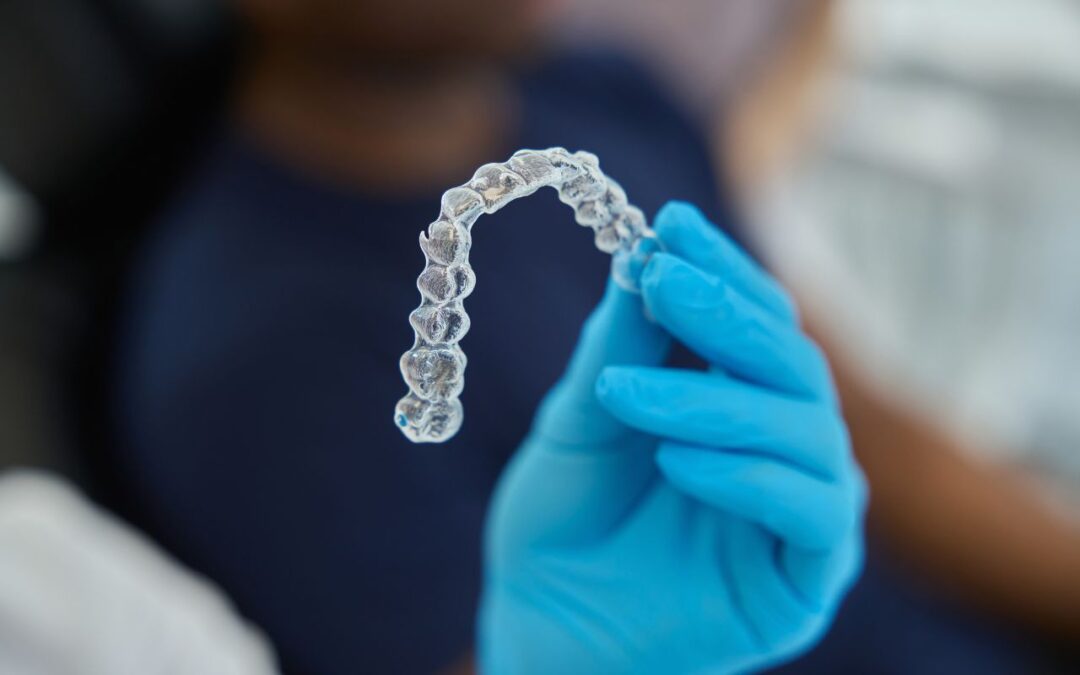
Can invisalign and TMJ relief go hand in hand? Yes, Invisalign can help certain TMJ cases – especially when bite misalignment is a key factor – by realigning teeth and reducing joint stress. In milder cases, patients often see symptom improvement; in more severe TMJ, it should be part of a broader treatment plan.
This article explores invisalign for TMJ, how and when it works, and what Amarillo patients should know before turning to clear aligners. At Dental Group Orthodontics, Amarillo, Texas, we use evidence-based approaches and patient experience to guide treatment choices.
What Is TMJ Disorder?
Temporomandibular joint disorder (TMJ disorder or TMJ syndrome) refers to problems involving the jaw joint(s) and surrounding muscles. People often report temporomandibular joint dysfunction symptoms such as jaw pain, clicking or popping sounds, headaches, and restricted jaw movement.
Common causes include dental malocclusion (misaligned bite), teeth grinding or clenching (bruxism), trauma, or muscular tension. When teeth don’t meet properly, the jaw joint may endure uneven force, making TMJ disorder symptoms worse over time. Fixing bite alignment is one pathway to easing that stress.
How Invisalign Can Help with TMJ
Mechanism
Invisalign aligners for teeth are custom, clear trays that exert gentle, controlled pressure on teeth to reposition them over time. By improving how the upper and lower teeth meet, alignment-based jaw strain can be reduced. This moderation of force distribution can help relieve TMJ pain caused by bite imbalance.
Evidence & Outcomes
While robust randomized trials are limited, some observational and clinical studies report that a significant percentage of patients—often cited as 60–70%—experience a reduction in TMJ symptoms after orthodontic correction in bite-related cases. For instance, a review of clear aligner therapy noted reductions in temporomandibular disorder severity following treatment.
That said, a comprehensive review on orthodontics and temporomandibular disorders underscores that while tooth position and occlusion can influence TMD, orthodontic treatment is not a guaranteed cure for all types of TMJ disorder.
Suitability
Invisalign and TMJ alignment strategies are typically best suited for mild to moderate cases where malocclusion is a contributing factor. In severe cases—such as those driven by joint degeneration, arthritis, or disc displacement—Invisalign alone may not suffice.
Pros and Cons of Invisalign for TMJ Treatment
| Aspect | Pros of Invisalign for TMJ | Cons / Limitations |
|---|---|---|
| Effectiveness | Bite correction may relieve joint strain and improve TMJ and invisalign synergy | Not effective for severe structural TMJ pathology |
| Comfort & Lifestyle | Removable and discreet—no wires; easier oral hygiene; invisalign aligners are less conspicuous | Requires consistent wear (20–22 hours/day), patient compliance |
| Aesthetic / Social | Minimal visual impact—good for adults/teens | May not address all underlying TMJ issues |
Additional caveats: Some patients during Invisalign treatment report transient increased muscle soreness or jaw tightness, especially early on, possibly as teeth shift and muscles adjust. Also, in one clinical prospective study, some Invisalign users initially experienced increases in bruxism symptoms before stabilizing.
Alternatives and When to Choose Invisalign
If your TMJ symptoms stem from muscular overload, grinding, or internal joint damage rather than pure bite misalignment, alternative or adjunctive treatments may be more appropriate. These include:
-
Custom nightguards / occlusal splints
-
Physical therapy, jaw exercises, posture, and stress management
-
Botox or muscle relaxants (where appropriate)
-
In advanced cases, surgical or joint-level intervention
The American Association of Orthodontists (AAO) notes that clear aligners are best for mild to moderate malocclusions, and more complex cases may need traditional braces or surgical approaches.
When to lean toward Invisalign? If you are an adult or teen with bite-related symptoms, prefer a discreet option, and don’t have severe joint degeneration, then invisalign for TMJ is often a reasonable option.
Next Steps: Getting TMJ Relief in Amarillo
If you’re in Amarillo and experiencing TMJ disorder symptoms, your first step is a thorough evaluation. A local orthodontist (such as at Dental Group Orthodontics) can scan your bite, assess joint health, and determine whether TMJ and invisalign treatment is a suitable path. Many practices offer a free or low-cost initial consult—ask whether they include TMJ evaluation.
Conclusion: A Straighter, Pain-Free Path Forward
Invisalign aligners can be a valuable tool in the toolbox for invisalign dental therapy aimed at addressing invisalign treatment for aesthetics and function. In cases where a misaligned bite contributes to TMJ syndrome treatment, invisalign aligners have the potential to ease TMJ pain and improve jaw function. That said, they are not a universal cure; complex or structural TMJ disorder cases often require multi-modal care.
Ready to explore whether invisalign on teeth might help with your TMJ? Contact Dental Group Orthodontics, Amarillo, Texas, today for a consultation and take the first step toward relief and alignment.